The bus shelter is doing more than you think
Stand at a bus stop in a Korean city and look at the shelter properly. There is a lit display showing which buses are coming and how many minutes away they are. There is a bench, and in winter the bench is warm, because it is heated. There is a network name broadcasting from somewhere in the frame. And on a flat panel near the seat, marked with a small icon, there is a pad where you can set your phone down and it will begin to charge.
None of this is a product you bought. Nobody is going to ask for your details. The shelter is simply a piece of municipal furniture that happens to include electricity and a network connection, and it treats both the way it treats the light overhead.
What stops being a background task
Two small anxieties run underneath most people's days when travelling, and both are so constant that they are hard to see.
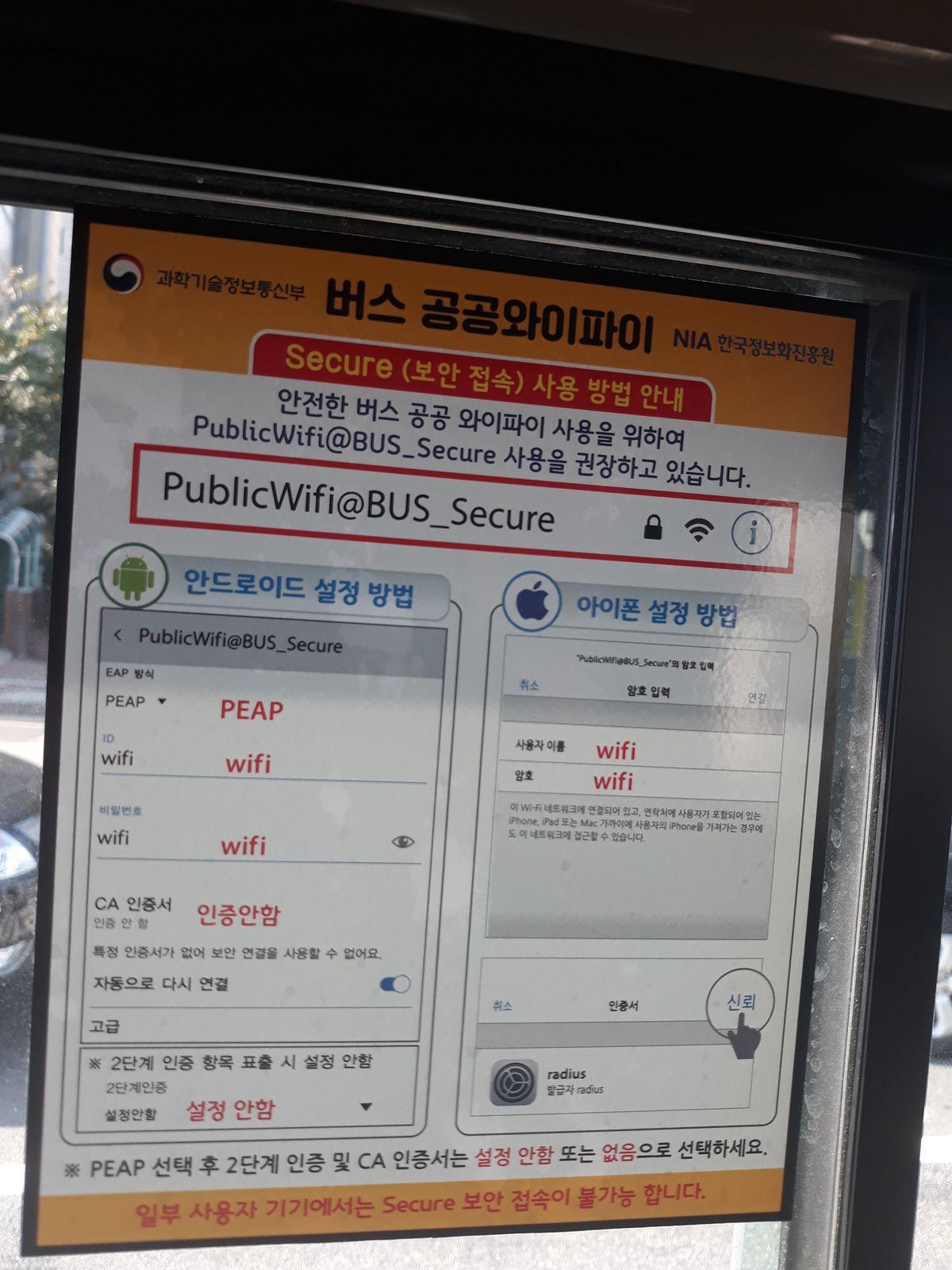
The first is data. Away from home, connectivity is metered in some way — a plan with a ceiling, a roaming arrangement with a worse ceiling, a habit of downloading maps in advance and turning things off. People develop small rituals around it: checking usage, waiting to upload photos, hesitating before opening a video. In Korea those rituals stop paying off, because the bus has a network, the subway carriage has a network, the station has one, the shelter has one, and most of them want nothing from you.
The second is battery. Battery anxiety is a specific and well-documented modern condition, and the behaviour it produces — dimming the screen, closing apps, rationing the map, quietly scanning cafés for a socket near a table — is entirely automatic. What visitors describe is not the joy of charging a phone on a bench. It is the moment several days in when they notice they have stopped calculating.
The change is subtractive rather than additive, and it takes people a while to attribute it correctly. Many report simply feeling less tethered without immediately knowing why.
Why the city provides it
It is treated as an amenity, not a service. The decisive factor is a category decision made at the level of local government: public connectivity belongs in the same budget line as street lighting and benches. Once something is classified as street furniture, the question stops being how to monetise it and becomes how to maintain it.
Backhaul is cheap because the country is small and dense. Korea has heavy fixed-line and mobile infrastructure covering short distances between very concentrated populations. The marginal cost of attaching one more access point to an existing network in a city like this is genuinely low, which is what makes a policy of giving it away survivable.
The shelter was already electrified. This is the unglamorous reason and probably the strongest one. Korean bus shelters already carry power for lighting, arrival displays and seat heating, and they are already on a maintenance schedule. Adding a charging pad and an access point to an object that is already wired and already visited by technicians is an incremental cost. Adding them to a bare metal pole in a city with unpowered stops is not.
District governments copy each other. Local administrations here are numerous, comparable, and competitive about visible quality-of-life improvements. One district installs heated benches and charging pads; the neighbouring district is asked why it has not. This produces fast, uneven, enthusiastic diffusion — which is exactly the pattern you see on the ground.
What this is not
The quality is variable and sometimes poor. Public networks on moving vehicles drop, hand over badly, and slow to a crawl when the carriage is full. Some are fast and some are barely usable, and which is which is not predictable from the signage. Anyone who arrives expecting flawless connectivity everywhere will be annoyed within a day.
The charging pads are slower than a cable and are not always working. They are sometimes occupied, sometimes filthy, sometimes fitted to a phone case they cannot charge through, and always require you to sit next to your own device rather than leave it. They are a top-up, not a power supply, and treating one as your charging plan is a mistake.
There is also a language and access wrinkle: joining a network sometimes involves a page in Korean, and some networks are open while others are effectively for residents. The picture is patchier than the summary suggests.
And it is worth saying that this is not a gift. It is public spending, argued over locally like any other public spending, and there are Koreans who think the money would have been better used elsewhere.
Why it lands as a surprise
Connectivity and power are not exotic. Every visitor has both at home. What makes this land is a change in who is assumed to be responsible for them.
In most places, a network and a socket in a public space are commercial objects. They belong to a café that expects you to buy something, an airport lounge, a hotel, a paid hotspot with a login wall. The unstated rule is that access in public is a transaction, and everyone has internalised the etiquette that goes with it — buy the coffee, take the seat by the plug, do not overstay.
Korea does not so much break that rule as decline to have it. The shelter offers the network the way it offers the roof. That is a small reclassification with a disproportionate effect, because it removes an entire layer of low-grade negotiation from the day.
Which is why the reaction is so uneven. A visitor from a city with strong municipal broadband and public power finds this ordinary and slightly overhyped. A visitor from a place where every connection is a purchase sits down on a heated bench, puts a phone on a pad, and has a small, disproportionate feeling about a bus stop. The bench is not remarkable. It is remarkable against a baseline nobody chose and few could describe.